Incorporation of Company Branding and SEO
- April 17, 2014
- Advanced SEO Techniques, Brand development, SEO
Most businesses treat branding and SEO as two separate things. The SEO team chases keywords and rankings. The brand team handles visuals, tone, and messaging. They rarely talk to each other.
This is a strategic mistake.
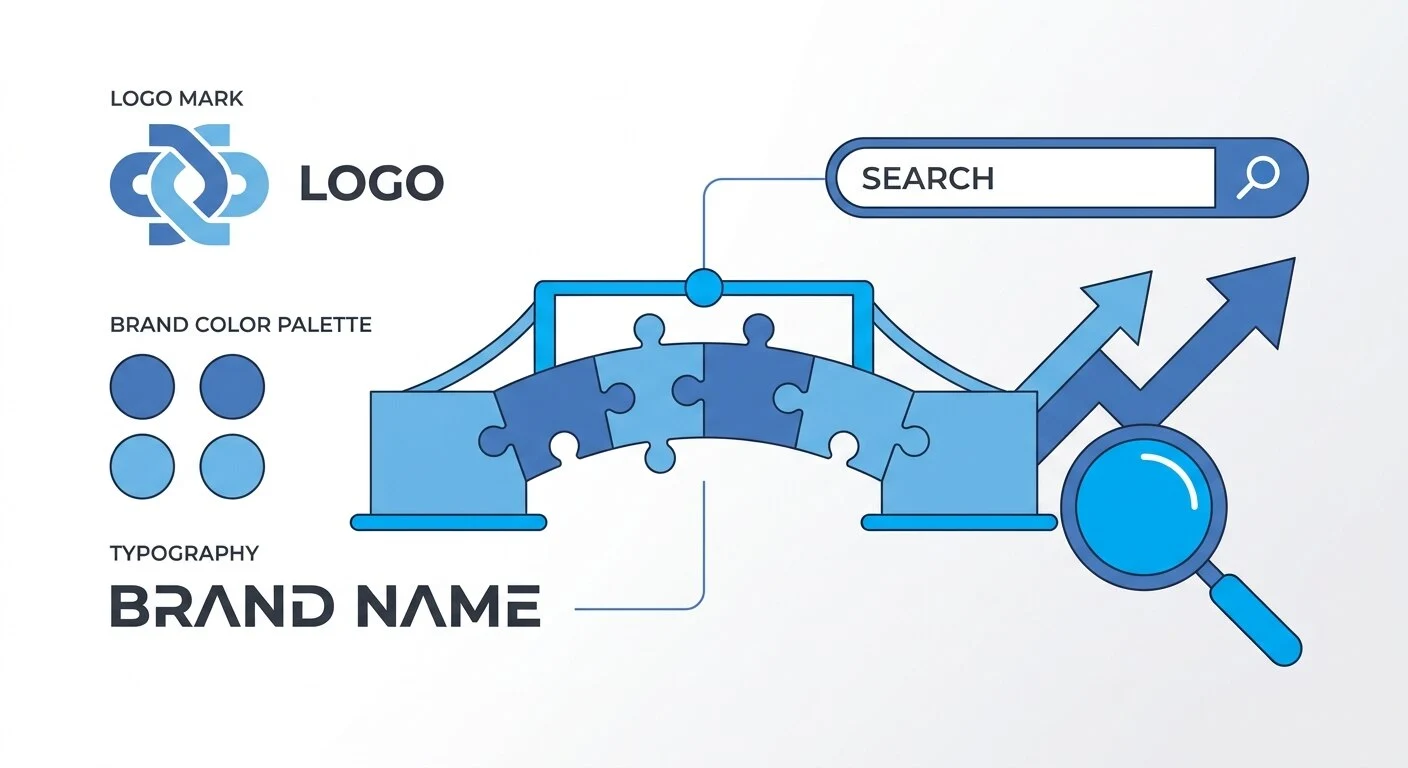
Branding and SEO are deeply connected. One drives recognition. The other drives visibility. When you combine them, you build a stronger online presence that lasts.
This guide shows you how to bring company branding and SEO together. You will learn why it matters, how search engines read brand signals, and what steps to take right now.
What Is Company Branding in the Context of SEO?
Branding is more than a logo or a color scheme. It covers the full identity and values of your business. It shapes how people see your company, interact with it, and remember it.
Good branding builds recognition, recall, and preference among your audience. When people hear your name, they should know what you stand for.
SEO branding takes this a step further. It works to build your company's recognition and trust with both users and search engines. Think of it as link building for your reputation. You are not just earning links. You are earning trust.
Why SEO and Branding Are Not Separate Things
Brand interest has a direct effect on SEO performance. The more people know your brand, the more they search for it. The more they search for it, the stronger your search signals become.
At the same time, SEO helps people discover your brand. Without search visibility, building brand awareness becomes much harder. The two feed each other.
Your content should speak to your audience while carrying your brand's unique voice. Content that sounds generic does not build brand loyalty. Content that ignores SEO does not get found.
The goal is content that does both.
Why Company Branding Matters for SEO Performance
Brand awareness has a clear path to revenue. Brand builds awareness. Awareness drives search. Search drives traffic. Traffic drives sales.
Here is what the data shows:
Brand demand acts as an SEO multiplier. Top-performing websites benefit heavily from brand searches. According to NP Digital's analysis of over 42,000 websites, non-brand SEO alone limits long-term growth. Sites that invest in brand building see stronger organic results across the board.
Branded searches convert better. Research from BrightEdge shows that branded searches have a 2.5 times higher conversion rate compared to non-branded searches. Other studies put this figure even higher, with branded queries generating up to 4.4 times higher conversion rates from AI-driven search traffic.
Click-through rates are significantly higher for branded terms. Branded keywords at position one get a CTR of about 35.68%, while non-branded keywords at the same position get around 28.16%. One analysis of 250 million search results found that the aggregate CTR for the top 10 results was about 71.36% for branded queries but only 37.88% for non-branded ones.
Brand and entity signals are growing fast in Google's algorithm. According to Emulent's 2026 ranking factor study, brand and entity signals have the largest two-year gain among all ranking categories, climbing from an average weight of 7.3 in April 2026 to a projected 8.9 by 2028. That is a +1.6 point increase, the biggest jump across all signal types.
The Branded Search Advantage
Branded search happens when someone types your company name or product name into Google. These are high-value searches because the user already knows you. They are not comparing options. They are looking for you.
Branded searches show higher purchase intent. Non-branded searches usually mean the user is still exploring and weighing their options. Understanding different types of keyword intent helps you see why branded traffic performs better on almost every metric.
Branded searches also create a positive feedback loop. When users search for your brand and click on your result, they generate strong engagement signals. They spend more time on your site. They bounce less. They visit more pages. Google sees all of this and rewards your site with better rankings.
Organic search traffic has a bounce rate of about 42%, while paid search sits at 59% and paid social at 65%. When you compare SEO and paid search performance, organic branded traffic performs even better because these visitors already trust you.
How Search Engines Read Brand Signals
Google no longer just matches keywords. It understands meaning, context, and relationships between entities. This shift changes how branding works in SEO.
The 2024 Google API leak confirmed that Google tracks attributes like site authority and a click-tracking system called NavBoost. These findings suggest that perceived brand strength is a ranking factor. Understanding how domain authority impacts rankings helps explain why Google values strong brands. This directly contradicts earlier claims that Google does not use a site-wide authority value.
In simple terms, Google pays attention to your brand. A strong brand sends positive signals. A weak brand makes it harder to rank.
Entity SEO and Your Brand
An entity is how Google identifies and categorizes things in its Knowledge Graph. Your brand can be an entity. So can your products, your founders, and your topics of expertise.
Google's Knowledge Graph holds over 500 billion facts and more than 5 billion entities. Brands that actively manage their entity data are far more likely to earn a Knowledge Panel. Research shows that about 72% of brands with active entity data management have Knowledge Panels, compared to only 14% of those without.
Entity SEO is the practice of building and strengthening your brand's identity in this system. It means making sure Google can clearly identify who you are, what you do, and why you matter.
If your brand searches are weak, your entity signals are messy, and your data is inconsistent, Google cannot trust you. This limits your visibility in both regular search results and AI Overviews.
Strong entity SEO strategies in 2026 place high value on co-occurrence and unlinked brand mentions. This means Google looks at where your brand name appears across the web, even without a direct link. If your brand name keeps showing up next to relevant topic terms on trusted websites, Google sees that as an authority signal.
E-E-A-T and Brand Trust
E-E-A-T stands for Experience, Expertise, Authoritativeness, and Trustworthiness. Google uses this framework to evaluate whether an entity is credible.
Strong E-E-A-T helps Google check if your brand is connected to real-world trust signals. These include authorship, brand recognition, citations from trusted sources, and overall reputation. Learning how to protect your brand reputation online is an important part of building these signals.
When Google ranks your website at the top of search results, users see this as an endorsement. That perceived trust from the search engine transfers to your brand. This is especially powerful for users who have never heard of your company before.
Building E-E-A-T is not a one-time task. It requires consistent effort across your website, social profiles, and third-party platforms.
How to Incorporate Branding into Your SEO Strategy
Now let's look at the practical steps. These are actions you can start today.
1. Start with Keywords, Then Layer in Branding
If your company is new, focus on keywords first. Use a complete guide to keyword research to target terms that describe your offering rather than your company name. Build visibility around what you sell and what problems you solve.
As you grow and build a loyal audience, start adding branded elements. Include your company name, product names, slogans, and associated terms into your on-page optimization best practices.
This phased approach works because early-stage companies need traffic, while established companies need recognition. You cannot build a brand if nobody can find you.
2. Build a Brand Voice Guide for SEO Content
Every piece of content should sound like your brand. This is where many businesses fail. Their blog posts read like they could belong to any company.
Create a brand voice guide that your content team can follow. Document your tone, word choices, sentence style, and the values you want to communicate.
Then add SEO rules to that guide. Include instructions on link usage, heading structure, keyword placement, and formatting. Your brand guidelines and SEO best practices should live in the same document.
Review content for voice alignment the same way you review it for SEO performance. If a blog post ranks well but sounds nothing like your brand, it is doing half the job.
3. Keep Your Brand Consistent Across All Platforms
Brand consistency is one of the most underrated factors in SEO. Search engines value it because it builds trust signals.
Your customers should experience the same messaging no matter where they find you. Whether it is your website, a blog post, a social media profile, or a Google Business listing, the brand voice and identity should match. If you use Google Business Profile, make sure to optimize your Google Business Profile with accurate and consistent brand information.
Consistency also applies to your company data. Your name, address, phone number, and business descriptions should be identical across every directory, social platform, and listing. You can submit to free business directories to build consistent brand signals across the web. Even small differences can confuse search engines and weaken your entity signals.
Google builds its understanding of your brand by collecting data from many sources. When all those sources say the same thing, Google gains confidence in your entity.
4. Use Content Strategy as the Bridge
Content strategy is the main connection point between SEO and branding. Good content serves both goals at the same time.
A content strategy that aligns with your brand does not mean you ignore SEO. It means you write about topics where your brand has real credibility. You target keywords that match your expertise and brand positioning.
For example, a luxury brand should not chase "cheapest option" keywords. An enterprise software company should not target "best for small business" queries. Your keyword strategy should match your brand identity.
Build topic clusters around your core brand themes. Cover each topic from multiple angles using a hub and spoke content structure. This signals to Google that your brand is a topical authority, which strengthens your entity signals.
5. Invest in Entity SEO and Schema Markup
Structured data is how you help Google understand your brand at a technical level. Schema markup lets you feed specific information about your business directly to search engines.
Use Organization schema to define your company name, logo, official website, and social profiles. Use Product schema for your offerings. Use Person schema for key team members.
Beyond your website, build your brand's presence on platforms that Google trusts. Create or claim your Wikidata entry. Set up profiles on relevant industry directories. Earn mentions and coverage from authoritative websites.
Each of these actions strengthens your node in Google's Knowledge Graph. The stronger your node, the more likely Google is to show a Knowledge Panel for your brand and include you in AI Overviews.
6. Align PR, Branding, and SEO
These three areas work best when they support each other.
PR coverage earns media mentions and backlinks that boost SEO. Strong SEO rankings build brand credibility. Brand recognition increases click-through rates in search results.
Every PR campaign should be treated as an SEO initiative. Every strong piece of content supports the brand. And every brand interaction improves search signals.
Content with verifiable statistics and named citations achieves 30 to 40% higher visibility in AI-powered search results, according to SimilarWeb analysis. This means well-researched, authoritative content helps both your brand reputation and your AI search presence.
Common Mistakes When Merging Branding and SEO
Bringing branding and SEO together is not always smooth. Here are the most common traps.
Over-optimization. This happens when SEO completely takes over your brand voice. Your content starts to sound robotic and keyword-stuffed. Users can feel it, and they leave.
Brand purism. This is the opposite problem. Your creative team ignores search data and writes whatever feels right. The content sounds great but nobody finds it.
Siloed execution. Your brand team and SEO team work separately. Neither knows what the other is doing. The result is inconsistent messaging and missed opportunities.
Wrong keyword targeting. Chasing keywords that conflict with your brand positioning can damage how people see you. A premium brand targeting budget keywords sends mixed signals.
Outdated content ranking for branded searches. Old PDF files, press releases, or obsolete product pages can show up in branded search results. This creates a bad experience for users who are looking for current information about your company. Regular audits help you find and fix these issues.
Ignoring branded SERP management. Your branded search results page is your digital front door. If competitors, review sites, or outdated content dominate that page, you lose control of your own narrative.
How to Measure the Success of Your Branding and SEO Integration
You need to track the right metrics to know if your combined strategy is working.
Branded search volume. This is the clearest indicator of brand awareness growth. Track how many people search for your company name, product names, and brand-related terms each month. Google Search Console now offers a branded query filter that makes this much easier.
Click-through rate for branded vs. non-branded terms. Compare these two numbers. If your branded CTR is strong but your non-branded CTR is low, your SEO content needs improvement. If both are growing, your integration is working.
Organic traffic quality. Look at bounce rate, time on page, and pages per session for branded vs. non-branded traffic. Branded traffic should show stronger engagement across all these metrics.
Knowledge Panel presence. Check if Google shows a Knowledge Panel for your brand. If it does, monitor it for accuracy. If it does not, your entity signals need work.
Non-branded organic growth. This tells you whether your SEO efforts are reaching new audiences beyond your existing brand fans. A healthy strategy shows growth in both branded and non-branded traffic.
Brand mentions and link acquisition. Track how often your brand gets mentioned across the web and how many new backlinks you earn. Understanding the difference between backlinks and referring domain metrics helps you measure this more accurately. These are direct inputs to both brand authority and SEO performance.
Conversion rates by traffic type. Compare how branded and non-branded visitors convert. Branded traffic will almost always convert better, but the gap between the two tells you how much work your brand is doing.
Track how major brand campaigns connect to changes in organic performance. When you launch a PR push, a rebrand, or a new product campaign, watch what happens to your branded search volume and organic traffic in the weeks that follow. These connections help you make smarter investment decisions.
The Future of Branding and SEO
The connection between branding and SEO will only grow stronger. Search engines are getting better at reading brand signals and user preferences every year.
Traditional SEO was about matching keywords. In 2026 and beyond, search evaluates real brands, real expertise, and real customer sentiment. This is a fundamental shift.
Brand and entity signals carry the largest two-year gain among all ranking categories and are expected to keep climbing. AI Overviews are pulling more answers from entities that Google can verify. Targeting keywords for AI Overview visibility is becoming a key part of any branding strategy. This means unverified or unknown brands will become even harder to rank.
AI search tools like ChatGPT, Perplexity, and Google's Gemini prefer sources they classify as established and topically relevant. Entity authority and brand signals increase the chance that these systems will cite your content.
If your brand is not clearly established in Google's Knowledge Graph, you risk being invisible in both traditional search results and AI-powered search experiences.
The brands that will win are those that treat SEO and branding as parts of one strategy. Not as separate departments with different goals.
Frequently Asked Questions
What is SEO branding?
SEO branding is the practice of aligning your brand identity with search optimization. It means building your company's recognition and trust with both search engines and users. When done well, it improves visibility, click-through rates, and conversions.
Should startups focus on SEO or branding first?
Start with keyword-focused SEO to build initial visibility. Target terms around your products and services rather than your company name. As you gain traction and build a loyal audience, start layering in branding elements. Both matter, but SEO usually comes first for new companies.
How do branded keywords help SEO?
Branded keywords show high intent. Users who search for your brand name are already familiar with you. This leads to higher click-through rates, longer time on site, and better conversion rates. These positive engagement signals tell Google that your site is valuable, which helps your overall rankings.
What is entity SEO?
Entity SEO is the practice of building your brand's identity in Google's Knowledge Graph. It involves making sure Google can clearly recognize your business as a distinct entity with specific attributes, relationships, and topical expertise. It goes beyond keywords and focuses on how search engines understand who you are.
Can small businesses benefit from SEO branding?
Yes. Even local and small businesses can benefit. Consistent branding across your website, Google Business Profile, social media, and local directories strengthens your entity signals. Follow a complete local search optimization guide to align your local presence with your brand identity.
How long does it take to see results from branding and SEO integration?
Branded search volume can start growing within a few months of consistent effort. Entity recognition and Knowledge Panel eligibility usually take longer, often six months to a year. The key is consistency. Every piece of content, every media mention, and every profile update adds to the signal.
Conclusion
Branding and SEO are two sides of the same coin. Every PR initiative is also an SEO initiative. Every strong piece of content supports the brand. And every brand interaction improves your search signals.
Stop treating these as separate activities. Build a unified strategy where your brand voice guides your content, your SEO data shapes your topics, and your entity presence ties everything together.
Start with one step today. Audit your branded search results. Use a complete website auditing checklist to review your schema markup and brand consistency. Check if your company data is consistent across platforms. These small actions build momentum.
The companies that bring branding and SEO together will own more search visibility, earn more trust, and grow faster than those that keep them apart. If you need help building this strategy, work with a professional search engine optimization agency that understands both branding and search.
Faisal Mustafa is an Online Market Specialist. He has been providing result oriented quality SEO services to clients worldwide successfully since 2008. He has hundreds of reviews and feedbacks on marketing forums. He is the admin of SEO viser team and a successful online marketer.
OUR SERVICES


Request a free quote
We offer professional SEO services that help websites increase their organic search score drastically in order to compete for the highest rankings even when it comes to highly competitive keywords.
More from our blog
See all posts