How Long Does SEO Take in Bangladesh? A Month-by-Month Timeline
- October 29, 2026
- Local SEO
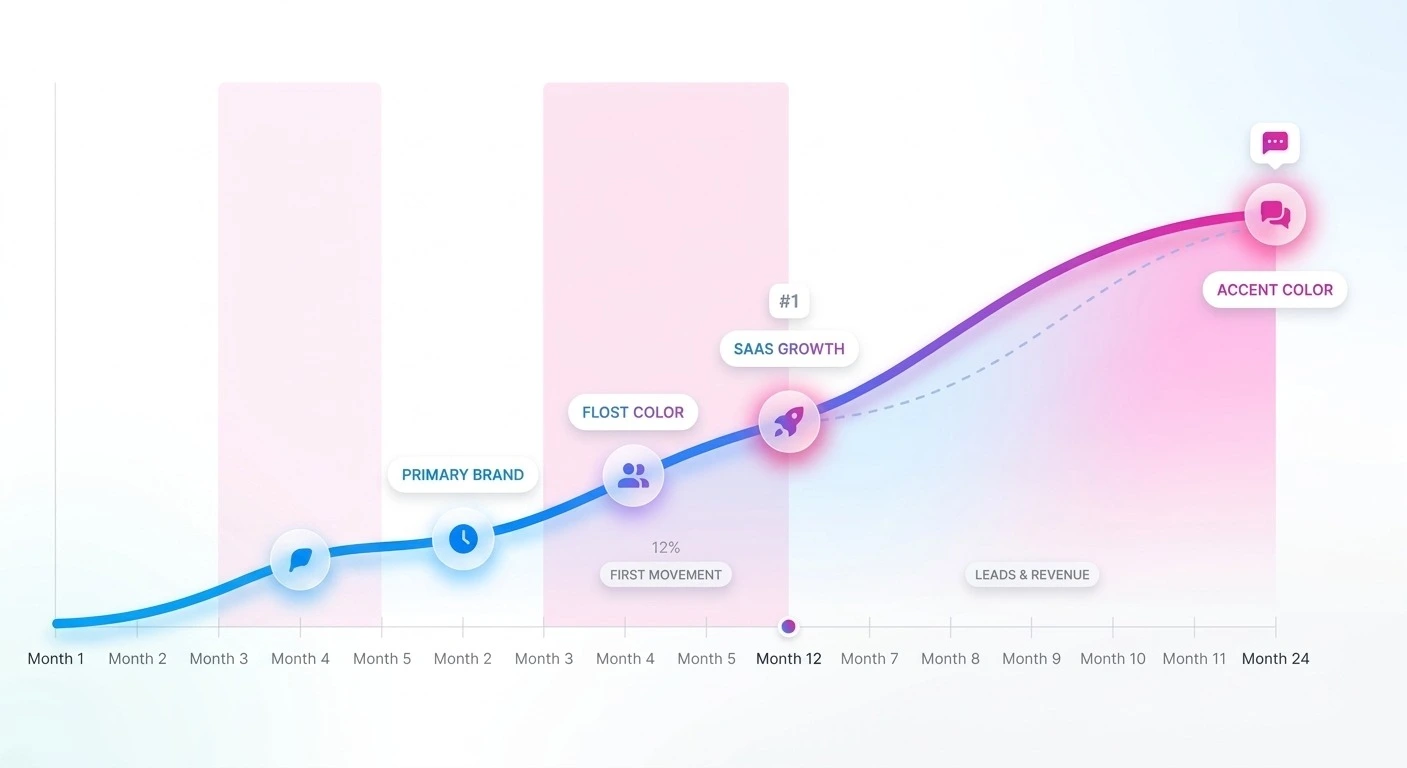
SEO in Bangladesh typically takes 3 to 6 months to show first measurable movement, while leads and revenue usually need 6 to 12 months of steady work.
That is the honest SEO timeline for a typical business, and it answers when SEO will show results.
Before you commit to a budget, check SEO audit costs in Bangladesh to see what a proper start entails.
The timeline breaks down like this for most Bangladeshi businesses.
- Months 1 to 2 (foundation and setup). Your agency audits the site, sets up Google Search Console and analytics, fixes technical issues, researches keywords, and reviews competitors.
You should see very little change in ranking yet. - Months 3 to 4 (early movement). Long-tail and low-competition keywords begin reaching page one. Impressions climb before clicks do.
- Months 5 to 6 (traction). Primary keywords approach the top of page one or page two. The first inquiries from organic search tend to arrive.
- Months 7 to 12 (compounding results). Authority builds, rankings broaden to dozens of related queries, and leads become more regular.
Your own timeline can run faster or slower, and four things decide it.
- Local or national reach. A local Dhaka business may see movement on local terms in roughly 2 to 4 months. An e-commerce store in a competitive category should expect 6 to 12 months or more to see results.
- Website age and history. A brand-new domain has no track record, so one Bangladeshi agency advises planning for 6 to 12 months.
- Industry competition. Finance, education, real estate, and health tend to be harder than narrow local services.
- Consistency. Steady monthly work beats bursts followed by silence.
Each stage has its own work, warning signs, and shortcuts to avoid. The sections ahead cover them one by one, starting with what "results" really means and why the wait exists.
What "Results" Really Means (and Why No One Can Promise a Date)
Competitive terms can take 12 months or more, and no one can honestly guarantee a ranking date.
Treat any agency that does with caution. The range above is not just our view; the sources you can check agree with it.
One Bangladeshi agency breaks it down as: 1-2 months for website improvements and indexing; 3-4 months for ranking gains; 4-6 months for traffic and leads; and 6-12 months for strong, consistent leads.
Another place compounding results between months 6 and 12, and notes that local, low-competition niches often move faster.
Global sources agree. They say competitive verticals can take 12 months or more.
The timing also depends on what you call a result. "Results" can mean four different things, and each arrives at a different time.
- Indexing: Google has found and stored your pages.
- Impressions: your pages appear in search results.
- Page-one rankings: you appear where people actually click.
- Leads and sales: the outcome your business cares about.
Pages can be crawled within days or weeks.
Competitive visibility usually needs months of useful work and evidence. If you only watch sales, you will think nothing is happening for the first four to five months.
A lot is happening, and it just isn't showing up in your inbox yet.
Why SEO Takes Time (and How to Stop Fearing the Wait)
SEO is slow because search engines have to discover, evaluate, and trust your site before they send you visitors.
You can't buy that trust. You build it as Google sees you publish useful pages and earn real mentions over time.
Google's own guidance supports this. Some changes can take effect within hours, while others can take several months.
Google recommends waiting at least a few weeks before judging whether a change worked. Requesting a recrawl doesn't make it instant, and it can still take days to weeks.
Several things add to the delay.
- Crawling and indexing. Google has to find your pages, process them, and decide which deserve a place in its index.
- Trust. A new domain has no history. Established competitors have years of accumulated signals.
- Content that takes time to produce. Good research, writing, and editing don't happen overnight.
- Links and mentions. Real endorsements from other sites are earned slowly. If you want to understand why they matter so much, our guide on backlinks vs referring domains explains the difference.
- Competitors who keep moving. You are not climbing a fixed ladder. Others are climbing it too.
Bangladesh adds its own pressure.
According to DataReportal’s Digital 2026 report on Bangladesh, internet users reached 82.8 million at the end of 2025, or 47.0% of the population. That is up from 77.7 million (44.5%) at the start of 2025, based on DataReportal’s Digital 2025 report.
As more people come online, more businesses compete for the same searches. A market that was thin five years ago can be crowded now.
SEO also pays off more over time than most channels. Ads stop the day you stop paying. Pages that rank can keep sending visitors for months or years after the work is done.
The cost is patience up front. When a client asks us whether the wait is worth it, we point to this gap. At SEOviser, we see the businesses that stay the course end up owning an asset, not renting traffic.
Your Month-by-Month SEO Timeline
The timeline below is a realistic model, not a promise.
It assumes a site with some existing authority, medium-competition keywords, and steady content and link work.
One published model assumes a domain authority of 20–35 and medium competition. A new site will run more slowly, and a strong site in a narrow niche will run faster.
The model combines patterns from several published timelines.
Month 1: Build the Foundation
Month 1 is groundwork, and you should not expect ranking changes. A good agency spends this month establishing a baseline and fixing foundations.
Typical work includes the following.
- Setting up Google Search Console and analytics, and confirming tracking works.
- Auditing the site for crawl errors, indexing problems, broken pages, and duplicate content.
- Fixing the most serious technical issues, especially mobile speed.
- Researching keywords and mapping them to pages.
- Reviewing competitors to see what it takes to rank.
- Claiming or cleaning up the Google Business Profile for local businesses.
You should get a written audit, a prioritized to-do list, and a clear plan—our SEO proposal checklist for Bangladeshi businesses outlines what specific line items to look for before signing.
A strong website audit and solution gives you exactly that. It should also check your robots.txt file, because one wrong line can block Google from your best pages.
It should also look at whether Google is ignoring your canonical tag. If someone promises page-one rankings after four weeks, they are either targeting terms nobody searches for or being dishonest—read our complete guide on how to choose an SEO agency in Bangladesh to avoid these red flags.
Month 2: Publish the First Fixes
In Month 2, the first real optimization work goes live.
On-page SEO fixes (titles, headings, internal links, page copy) have been published, and the first new content has appeared.
Early outreach begins for links and mentions. This is also when you settle how many keywords a website should have, so each page has one clear job.
You may see pages getting indexed and a few long-tail queries appearing in Search Console impressions. Traffic usually hasn't moved much. The thing to check is that crawl errors are falling and the number of indexed pages is climbing.
Those are signs the foundation is solid.
Months 3 to 4: Early Traction Appears
This is where early traction commonly starts. One timeline model places the main target keywords at positions 15–30 in month 3 and at positions 8–15 in months 4–5.
Impressions typically climb before clicks do, so Search Console will show growth first.
Long-tail and low-competition phrases are often the first to reach page one.
A Dhaka dental clinic, for example, may start ranking for "dental implant cost Mirpur" before it appears for "dentist in Dhaka." That's normal and useful because specific searches often come from people closer to booking.
Expect modest traffic growth in these months, perhaps in the range of 10–20% over baseline in a healthy campaign.
Some Bangladeshi agencies place the gains in ranking at 3–4 months, which is consistent with this stage.
A steady blog management service keeps the publishing rhythm alive here. Strong hub-and-spoke internal linking also helps; avoid the common mistakes that weaken it.
Keep publishing, keep building links, and don't change strategy because the traffic graph looks flat.
Months 5 to 6: Time for a Review
By months 5 and 6, the work of the first four months starts to show.
Primary keywords may be approaching the top of page one or page two. Some pages begin earning meaningful traffic, and the first inquiries from organic search tend to arrive.
This is also the best time for a review. Ask yourself three questions.
- Which pages are close to page one but stuck?
- Which keywords are showing impressions but few clicks?
- Where are competitors outranking you, and why?
Refreshing pages that sit at positions 8-15 is often the fastest win available. A stronger title, more complete content, and better internal links can push them across the line.
Many agencies use 3 to 6 months as the benchmark for judging whether early progress is real. If your pages need extra authority, a guest post service or a contextual backlink campaign can add the missing push.
Months 7 to 9: Rankings Broaden
Rankings broaden. Instead of a handful of keywords improving, dozens or hundreds of related queries start appearing, because your site now covers a topic more fully.
Authority compounds, so new pages rank faster because the site as a whole is trusted more.
Work in this window typically includes the following.
- Expanding topic clusters around the pages that are performing.
- Building supporting content that answers customer questions.
- Earning stronger links and local mentions.
- Adding case studies and proof that help both rankings and conversions.
Leads become more regular here. Not every business will see a big jump, but the direction should be clearly upward.
This is the stage where monthly SEO packages earn their value, because steady work compounds.
Months 10 to 12: Core Terms Settle
In a healthy campaign, core terms stabilize near the top of page one.
The model above projects top-5 rankings and traffic 3–5 times the starting level by months 9–12, with the caveat that it is a single scenario, not a rule.
More realistic for many Bangladeshi small businesses is solid page-one coverage of long-tail and mid-competition terms, with head terms still being contested.
The cost of acquiring each lead from search usually starts to decline during this period because you are no longer paying for foundation work.
This is also the point to compare the first year's spend against the leads and sales that organic search actually produced.
After the First Year: Compound Your Gains
After year one, SEO shifts from building to compounding. The site has authority, and each new page benefits from it. Harder, higher-volume keywords become reachable.
The work changes character.
- Updating older content before it decays.
- Consolidating overlapping pages.
- Expanding into new services, locations, or product lines.
- Defending positions against new competitors.
SEO also needs ongoing maintenance.
Algorithms change, competitors improve, and content ages. Stopping work doesn't make rankings vanish overnight, but they tend to slide gradually. A complete SEO solution covers all of these tasks in a single plan.
How Long Each SEO Task Takes
Overall, timelines are easier to understand when you see how long each task takes.
The table below gives typical ranges for a small-to-medium business website. They are practical estimates from common agency workflows, not guarantees, and they vary with site size and complexity.
| Task | Time to complete | When you may see an effect |
| Technical fixes (speed, indexing, canonicals) | 1-4 weeks | Days to a few weeks |
| Google Business Profile setup and cleanup | A few days | A few weeks for local searches |
| Keyword research and page mapping | 1-2 weeks | No direct effect; guides everything else |
| On-page rewrites of existing pages | 2-6 weeks | 1-3 months |
| New content (articles, service pages) | Ongoing | 2-6 months |
| Link and mention building | Ongoing | 3-6 months or more |
| Content refreshes on near-page-one pages | A few days per page | A few weeks to 2 months |
Two points stand out. Technical fixes can show an effect quickly because they remove blockers.
Speed work is a good example, and website speed optimization often pays off first, especially when you pass the Core Web Vitals thresholds.
If the site itself is the problem, new web development services may be the faster fix. Content and links are slow because they build trust and relevance.
Google says a recrawl can take days to weeks, even after you request it.
Which Timeline Fits You? Six Common Bangladeshi Situations
A single "3 to 6 months" answer hides big differences.
The scenarios below show how the range shifts. The logic follows the common pattern in published guidance. Local and low-competition terms move faster, while new sites in competitive niches move more slowly.
A local Dhaka business (a clinic, restaurant, or coaching center).
Local SEO is often the fastest route, so the answer to "how long does local SEO take" is usually the shortest. With a well-built Google Business Profile, consistent business details, and local pages, you may see movement on local terms in roughly 2 to 4 months.
Many owners also ask how long it takes to rank on Google Maps. The same profile work drives it, and a few weeks of cleanup is often where the first effect shows.
An established site with technical problems.
If the domain already has age and links but has issues with speed, indexing, or structure, fixing them can lead to a quicker recovery than starting from scratch. Gains can appear within weeks to a few months.
A brand-new website in any niche. New domains have no history.
This is the honest answer to how long it takes a new website to rank. One Bangladeshi agency advises planning 6–12 months in advance for a brand-new site.
An e-commerce store in a competitive category.
Fashion, electronics, and cosmetics stores compete with large marketplaces and established brands. Expect 6–12 months or more, and focus first on specific product and category long-tail terms.
Our ecommerce SEO service starts this way. If you sell on Shopify, a Shopify SEO service and a good Shopify collection page SEO give you the same early wins.
A service company targeting international clients.
An IT or outsourcing firm competing for global keywords faces worldwide competition. Plan for 6–12 months or longer, with content and links built to a higher standard.
A Bangla-language content or news site.
Where Bangla-language competition is thinner, rankings may come faster for some topics. This depends heavily on the topic and should be tested instead of assumed.
If you're unsure which one describes you, start with a free audit. It will show your starting point and the competitiveness of your main terms.
Speed Up Your Results by Controlling What You Can
Some factors speed results up, and some slow them down. You control about half of them. Put your effort there first.
Things you control
- Site health. A fast, mobile-friendly, properly indexed site removes drag. Most Bangladeshi users browse on phones, and slow pages hurt both rankings and conversions.
Regular website maintenance keeps that health from slipping.
- Content quality and depth. Pages that answer real customer questions better than competitors do tend to move faster than thin, generic ones.
- Consistency. Steady monthly work beats bursts followed by silence, which is why deciding between an SEO agency vs freelancer in Bangladesh comes down to who can deliver long-term consistency for your team.
- Keyword choice. Starting with realistic, specific terms gets you early wins. Starting with the most competitive head term can mean a year of waiting.
- Internal linking. Pointing your own strongest pages at the ones you want to rank costs nothing and helps. Long lists of products or posts also need care, so read up on pagination SEO.
- Local signals. An accurate Google Business Profile, consistent name, address, and phone details, and genuine reviews matter for local searches.
- Link quality. A few relevant, real mentions beat hundreds of low-quality links.
- Tracking. If you can't measure it, you can't improve it.
Things you don't control
- Competitor strength. If rivals have years of authority and a bigger budget, you will need more time.
- Algorithm updates. Google changes its systems often, and rankings can shift, no matter what you do.
- Search demand. Some Bangladeshi niches have few monthly searches, which caps what SEO can deliver.
- Niche competitiveness. Finance, education, real estate, and health tend to be harder than narrow local services.
- Google's processing speed. You can't force it to crawl or evaluate your pages faster.
The practical lesson is to put your effort into the first list and plan around the second.
Plan SEO Around Bangladesh's Seasons
Publish seasonal pages two to three months before the demand peak. New pages need weeks or months to be indexed and gain traction, so late pages miss the season.
Check the exact timing for your own market in Google Trends before you commit to a calendar.
Bangladesh's calendar shapes what people search for and when. These are the key moments to plan for.
- Ramadan and the two Eids. These are major shopping peaks for fashion, electronics, food, gifts, and travel.
- Pohela Boishakh. A cultural peak for fashion, food, and event-related searches.
- Winter wedding season. Photographers, venues, jewelry, clothing, and catering see demand rise.
- Monsoon. Affects delivery, travel, appliances, and home and transport services.
- Admission and exam periods. Coaching centers, universities, and study-abroad consultants see sharp seasonal rises.
- Big sale events such as 11.11 and year-end e-commerce campaigns.
If you want to rank for Eid collection searches, work should start well before Ramadan. Start the same week as the festival, and you will miss most of the season.
Seasonality also affects how you read your data. A traffic dip after Eid doesn't mean SEO has failed. Compare year-on-year, not month-on-month, wherever you can.
Spot Progress Before the Traffic Arrives
Traffic is a lagging indicator, so watch the earlier signals. They tell you whether the work is on track long before the sales show up.
- Indexed pages. More of your important pages appear in Google's index.
- Impressions. Search Console shows your pages appearing in results more often, even before clicks follow.
- Query variety. The number of different queries you appear for keeps growing.
- Average position. Moving from position 40 to 20 to 12 is progress even when clicks are small.
- Branded searches. More people searching for your business name is a good sign of growing awareness.
- Crawl health. Fewer errors and quicker discovery of new pages.
- Early inquiries. A few calls, WhatsApp messages, or form fills from organic visitors, even in small numbers.
Ask your agency for these in a monthly report. If reports only show vague activity ("we built 20 links") and not outcomes, push for more clarity. A good report connects work done to changes in impressions, rankings, and inquiries.
We consistently see that clients who read these reports remain calmer and make better decisions.
Month 6 and Nothing Has Moved? Check These First
Six months with no change is a signal to diagnose, not to wait longer. Work through these causes in order.
- Are your pages indexed? A page that isn't indexed can't rank. Check Search Console for exclusions, "noindex" tags, or robots.txt blocks.
A fresh website audit and solution will catch these fast. - Did you target the right keywords?
Terms that are too competitive for your site's strength may need a year or more. Shift towards more specific phrases. - Does your content match search intent?
If searchers want a price list and you wrote a long essay, you won't rank.
- Is the content thin or duplicated? Pages that repeat what others say, or repeat each other, rarely get far. Check whether Google is also ignoring your canonical tag.
- Are your pages cannibalizing each other? Two pages targeting the same keyword compete, and both rank worse. Paginated sets can add to this, so review your pagination SEO.
- Is your link profile weak or irrelevant? Links from unrelated or low-quality sites add little.
- Is tracking accurate? Sometimes results exist, but analytics isn't capturing them.
- Has the work been consistent? A campaign that paused for two months doesn't have six months of momentum.
- Has the competitive landscape changed? A big competitor may have invested heavily, or an algorithm update may have shifted results.
Slow pages can also hold you back, so test your Core Web Vitals thresholds.
If everything on this list checks out and you've done six months of solid work, the issue may be the niche itself. In that case, a re-plan, with narrower targets and possibly paid support, is the sensible move.
How Fast Can You Show Up in AI Answers?
SEO still matters in the age of AI summaries. More searchers now see AI-generated summaries, and many business owners ask whether SEO is still worth it.
The answer is yes, and SEO timelines are increasingly discussed alongside AI Overviews.
We could not find reliable data on exactly how quickly new content is incorporated into AI answers. So treat any specific promised timeframe with suspicion.
What we can say is that AI visibility tends to build on the same foundations as organic ranking.
- Clear, direct answers to real questions, placed early on the page.
- Well-structured content with sensible headings.
- Consistent business information across your site and listings.
- Citations and mentions from credible sources.
- Genuine expertise and first-hand experience are shown on the page.
Since these overlap heavily with good SEO, much of the work done in months 1 to 6 also helps your chances of being cited.
If you want to go deeper, start with keyword research for AI Overviews. You can also learn how to implement llms.txt for AI crawlers, and double-check your robots.txt so you don't block the crawlers you want.
The honest position is that AI visibility is less predictable than classic ranking. It is worth tracking, but it should not replace the core plan.
Get Faster Results Without Risky Shortcuts
You can't make SEO instant, but you can remove delays. These legitimate steps tend to help.
- Start with long-tail and low-competition terms. They rank sooner and often convert well.
- Fix technical blockers first. Indexing and speed problems waste every other effort.
- Improve existing pages before writing new ones. Updating a page already at position 12 is quicker than building a new one from nothing.
- Strengthen internal links between related pages.
- Optimize your Google Business Profile with accurate details, photos, services, and reviews if you serve a local area.
- Earn relevant local mentions and links, such as local directories, press, partners and community sites. A trusted guest post service can help here when it uses real, relevant sites.
- Publish consistently according to a realistic calendar.
Be wary of the shortcuts that promise speed. Mass automated backlink tools, purchased social signals, link farms, and private blog networks can produce a short spike followed by a penalty or a loss of rankings.
Recovery from a penalty can take longer than doing it properly in the first place. Remember the lesson from backlinks vs referring domains. Quality and variety beat raw volume every time.
Guaranteed rankings in a few weeks are a red flag, not a selling point. A trustworthy partner explains the plan, sets realistic expectations, and reports honestly on progress.
Need Leads Sooner? Run Ads While SEO Builds
Paid ads can bring visitors within days while SEO builds. Google Ads and Meta ads fill the gap left by the 3- to 6-month wait.
SEO then builds the asset that will eventually reduce your reliance on ads.
Running both has some real advantages.
- Immediate leads while organic rankings develop.
- Keyword data. Ads show which search terms actually convert, which can inform your SEO targets.
- Testing. You can quickly try messaging and landing pages, then apply what works to organic pages.
- A smooth handover. As organic leads grow, you can gradually reduce ad spend on the terms you now rank for.
Costs and conversion rates vary a lot by industry, so set a modest test budget first and track cost per lead. A skilled PPC ad management team can run that test for you. The aim isn't to replace SEO with ads. Ads cover the gap while SEO catches up.
Real Timelines From Our Bangladeshi Campaigns
Real campaigns rarely follow a perfect line. Some move faster than the models above, and others run more slowly for good reasons, like a weak starting site or a tough niche.
We believe mixed results are more useful to you than a row of perfect success stories.
You can read how our own client campaigns unfolded on our case studies page. For feedback in clients' own words, visit our testimonials page.
Look at the starting point of each business first. That tells you which timeline is closest to yours.
Final Thoughts: Patience Plus a Plan Wins
SEO in Bangladesh usually shows initial progress within 3 to 6 months and business results within 6 to 12 months.
Competitive niches and brand-new sites can take longer. Local businesses and sites with solid foundations often move faster.
The practical approach is simple.
- Set expectations by milestone: indexing, impressions, rankings, and then leads.
- Track leading indicators so you know the work is on track before traffic arrives.
- Plan content around the Bangladeshi calendar.
- Avoid shortcuts that risk penalties.
- Use ads if you need leads while organic results develop.
SEO rewards consistency. The businesses that win are usually those that keep going through the quiet first months and let the results compound.
If you'd like a realistic estimate for your own site, contact us and request a free website audit and solution.
It will show your starting point, your competition, and the timeline that fits your situation. Start in the quiet months, and the loud months will follow.
Your SEO Timeline Questions, Answered in One Line
How long does SEO take in Bangladesh?
Most sites see measurable movement within 3 to 6 months, and leads or revenue usually follow within 6 to 12 months.
How long does local SEO take in Dhaka?
With a well-built Google Business Profile, consistent business details, and local pages, you may see movement on local terms in roughly 2 to 4 months.
How long does a new website take to rank?
New domains have no history, so one Bangladeshi agency advises planning for 6 to 12 months.
Why haven’t I seen results after 3 months?
Three months is often too early, since impressions and rankings usually climb before clicks, but if you see no change at month 6, check indexing, keywords, search intent, and consistency.
How long does it take to rank on Google Maps?
After a proper Google Business Profile setup and cleanup, you may see an effect on local searches within a few weeks.
Can SEO work in one month?
Not for rankings, because month 1 is groundwork, though technical fixes can show an effect within days to a few weeks.
How long does SEO take for an online store?
In a competitive category, expect 6 to 12 months or more, and start with specific product- and category-long-tail terms.
Do I need to keep doing SEO after I rank?
Yes, because algorithms change, competitors improve, and content ages, so rankings tend to slide gradually if you stop.
How long does it take to recover from a Google penalty?
Our research provides no set timeframe, but recovery can take longer than properly doing SEO in the first place.
Faisal Mustafa is an Online Market Specialist. He has been providing result oriented quality SEO services to clients worldwide successfully since 2008. He has hundreds of reviews and feedbacks on marketing forums. He is the admin of SEO viser team and a successful online marketer.
OUR SERVICES


Request a free quote
We offer professional SEO services that help websites increase their organic search score drastically in order to compete for the highest rankings even when it comes to highly competitive keywords.
More from our blog
See all posts