How to Do Keyword Research for AI Overviews and ChatGPT Citations
- September 21, 2026
- SEO
AI Overviews, ChatGPT, and Perplexity now answer plenty of buyer questions before anyone reaches a website. That shift changes what keyword research has to do.
Keyword research for AI Overviews and ChatGPT citations starts with optimizing for conversational, full-sentence prompts instead of short, static keyword phrases.
Most seo service providers are still building lists for a search engine that's fading out of the process. Here is a quick overview to get you started:
Shift From Phrases to Prompts
- Target long-form phrasing: real user prompts run well past the old two-to-four word query and read like a conversation, not a search bar entry.
- Map third-party surfaces: AI engines lean on sites like Reddit, Wikipedia, and industry news for a large share of their citations, so your own domain is only part of the picture.
- Audit competitive AI landscapes: query ChatGPT, Claude, and Perplexity directly with your target questions to see which domains they're already citing.
Build Your AI Keyword Strategy
- Cluster by fan-out, not phrase overlap: group your seed questions by the follow-ups an AI engine would naturally generate from them, not by shared words, so one comprehensive passage answers the whole cluster instead of three thin pages competing with each other.
- Structure content for extraction: answer each question in the first one or two sentences under its heading, before any context-setting, so a self-contained passage is ready to get lifted straight into an answer.
- Track with named metrics: monitor prompt coverage, citation frequency, and share of citations through tools like Ahrefs Brand Radar and the Semrush AI Toolkit, so you can see which prompts are actually citing you and which still need work.
Go through the full seven-step process for structuring your content so AI engines cite your brand as an authoritative source:
Why AI Search Needs a Different Keyword Process
AI engines don't rank pages.
They retrieve and rerank passages, then generate a synthesized answer citing whichever passages score highest.
A keyword can appear on your page in the exact phrasing a user typed and still get skipped, because the retrieval layer scores meaning and entity relationships, not string matches.
| Dimension | Traditional SEO | AI Keyword Research |
| Unit of work | Individual keyword | Prompt plus sub-question cluster |
| Success metric | Keyword rank, CTR, organic traffic | Citation frequency, share of citations, answer inclusion |
| Content unit | A page optimized for one phrase | A self-contained passage answering one question fully |
| Dominant query length | 2-4 words, short-tail | 8-20+ words, full conversational questions |
| Target engines | Google, Bing, blue-link results | ChatGPT, Google AI Overviews, Perplexity, Claude, Gemini, Copilot |
This comparison shows why a keyword spreadsheet built for Google alone leaves gaps.
The version above names the actual metrics teams track today, not vague visibility language.
How AI Engines Actually Retrieve Content
AI search runs on a process called retrieval-augmented generation, or RAG.
When someone asks a question, the engine turns it into a vector embedding, a set of numbers that represents meaning, then compares that embedding against embeddings for indexed passages across the web.
This is semantic matching: the system scores how close two ideas are in meaning, not whether the words match exactly.
Most systems also run a second, sparse keyword search alongside the vector search, then blend and rerank both by information gain before handing the top passages to the model.
That's why a page stuffed with an exact-match phrase can lose to a page that simply explains the idea more fully and names the right related concepts.
Step 1: Find the Questions People Actually Ask
Skip the keyword tool as your starting point.
Go straight to the language your audience uses when they're stuck, comparing options, or trying to finish a task.
That raw phrasing is what AI engines match against, not tool-generated keyword variants.
Pull questions from four places.
- Google Search Console - It shows the question-style queries already triggering impressions, filterable by words like what, how, why, best, and versus.
- Support tickets and chat logs - They capture the exact phrasing customers use when confused or comparing products, closer to how people talk to ChatGPT than how they type into Google.
- Reddit threads and niche forums - These platforms reveal informal, opinionated versions of a question, including objections a formal FAQ page never captures.
- Run an AI-expansion prompt - feed a seed question into ChatGPT or Perplexity and ask what someone would likely ask next, capturing five to ten sub-questions per seed.
Phrasing beats volume at this stage.
A specific, fully-formed question consistently outperforms a generic high-volume phrase in AI citation testing, because AI engines match meaning, not monthly search counts.
Even a long-tail question keyword for AI search like "best running shoes for flat feet under 100 dollars" gives the retrieval system more to work with than the bare phrase "best running shoes," even though the short phrase shows a higher number in traditional tools.
This matters even for terms with almost no recorded search volume; our piece on zero-volume keywords covers why those phrases still deserve a place in your plan.
Pro Tip: Keep a running list of the exact wording customers use in support tickets.
That raw phrasing usually beats anything a keyword tool suggests, because it's already proven to match how a real person asks.
Step 2: Cluster Questions Instead of Chasing Single Keywords
Once you have fifty or a hundred raw questions, group them by the question they're really asking, not by the words they share.
This keeps you from splitting one answer across three thin pages that end up competing with each other.
"How to do keyword research for AI," "AI keyword research steps," and "keyword research for ChatGPT citations" look like three different phrases, but they resolve to one retrieval intent and one ideal answer.
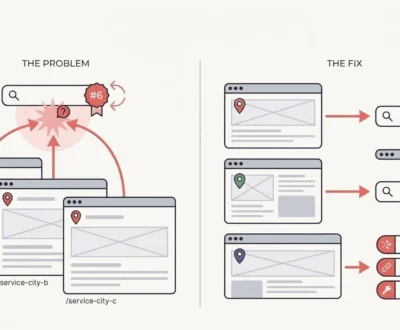
Building three thin pages for these dilutes topical signal instead of strengthening it, the same problem covered in our piece on location page keyword cannibalization.
One comprehensive passage answering all three framings concentrates that signal instead.
The most useful framing here is the fan-out query. Treat every seed question as the root of a conversational path, then map the five to ten natural follow-ups an AI engine would generate from it.
AI engines effectively generate and retrieve against that fan-out internally when answering a broad prompt, so content that pre-answers the fan-out gets pulled into more answers.
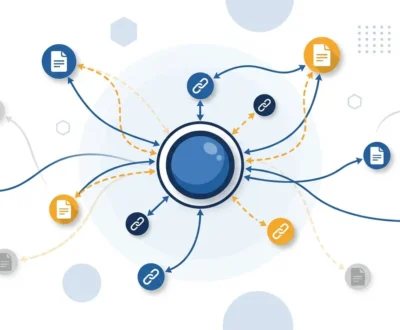
If you're organizing these clusters into a pillar-and-subpage structure, avoid the traps described in hub and spoke internal linking mistakes, since a badly linked cluster loses the authority signal it's supposed to build.
Caution: Don't manufacture near-duplicate questions to pad a content plan.
If two questions differ only by a swapped synonym, merge them into a single cluster and write one denser passage covering both phrasings, instead of publishing two thin, competing pages.
Step 3: Build an Entity Map for the Topic You are Writing for
Before you write a word, list every product, brand, and concept an authoritative answer on this topic needs to mention.
For any sort of topic research, that means actually writing the real names, like [Brand A], [Brand B], [Brand C], in your article, explaining simply how they work, and mentioning anything relevant for this topic.
Entity coverage matters because it directly supports the retrieval process explained above.
AI systems check whether a page correctly names and relates the entities a topic requires before deciding how much to trust it.
A page that skips the key concepts, engines, and terms tied to a topic reads as thin, even if it's well written.
On the other hand, a page naming the right entities in the right relationships signals real depth and earns more trust from the layer that picks passages for the final answer.
Entities worth covering for this topic:
- AI engines: ChatGPT, Claude, Gemini, Perplexity, Copilot, Google AI Overviews, Google AI Mode
- Retrieval concepts: RAG, vector embeddings, semantic similarity, BM25 keyword matching, reranking, information gain
- Citation mechanics: citation frequency, share of citations, answer inclusion, entity association, prompt coverage
- Schema types: FAQPage, HowTo, Article, Product, Organization
- Tracking tools: Ahrefs Brand Radar, Semrush AI Toolkit, Google Search Console
- Crawler identifiers: GPTBot, OAI-SearchBot, ClaudeBot, PerplexityBot, Google-Extended
Step 4: Test Whether AI Engines Actually Cite for Your Queries
Run your seed prompts manually across ChatGPT, Google AI Overviews, Perplexity, and Claude, then record what happens.
Check whether the answer cites a domain like yours, whether it's synthesized with inline citations or just a plain list of links, and which domains keep showing up across related prompts.
That third pattern is the useful one.
The domains that repeat across several related prompts are usually the ones an engine treats as default authorities for the topic, and that's who you're now competing against for citations, not just rankings.
| Platform | Dominant Source Types | Practical Note |
| Google AI Overviews | Brand and first-party sites, plus news and reference | Strong correlation with rankings, but overlap with top-10 has been falling |
| ChatGPT | Splits across brand sites, news, community forums, and reference sites | Wikipedia and forum presence noticeably lifts citation odds |
| Gemini | Favors the site's own domain when the brand is directly named | More likely to cite you on branded queries than generic category queries |
| Perplexity | Shows sources transparently in a visible list | Easiest platform to audit; you see exactly which passages it pulled |
| Copilot | Leans toward established publishers and high-authority news sites | Less likely to surface small independent sites than ChatGPT |
| Claude | Favors clarity and demonstrated expertise over promotional tone | Marketing-heavy phrasing appears to reduce citation likelihood |
This single table condenses weeks of platform-by-platform testing into one reference you can check before you write.
Step 5: Prioritize Queries With a Citable Answer Shape
Not every question in your cluster deserves equal priority.
AI engines don't quote every kind of answer equally. Some formats get picked far more often than others. Here are some examples: definitions, step-by-step processes, direct comparisons, and best-X-for-Y recommendations.
The writing implication is direct.
Answer the question in the first one or two sentences under each heading, before any context-setting.
A self-contained forty-to-sixty-word answer that names an entity and cites a real statistic is far more likely to get lifted whole into an AI Overview or a ChatGPT response than a paragraph that builds slowly toward its point.
AI query intent taxonomy:
- Factual: "What is RAG?" expects a tight definition
- Procedural: "How do I do keyword research for AI search?" expects numbered steps
- Evaluative: "Best AI citation tracking tools in 2026" expects a ranked list with stated criteria
- Exploratory: "AI keyword research versus traditional SEO" expects a side-by-side comparison, ideally a table
Matching each question to the right intent type early keeps your outline focused. Our breakdown of keyword intent types covers this in more depth if you need a fuller reference.
| Question Type | Ideal Content Format |
| How-to | Step-by-step guide with numbered stages |
| What-is | Short explainer, definition in the opening sentence |
| Best-X-for-Y | Listicle with stated criteria and examples |
| X-vs-Y | Comparison article built around a table |
Quick Tip: Before running full manual AI-citation tests on every keyword, filter your existing keyword list by the SERP feature "Featured Snippet" inside Semrush or Ahrefs.
Pages already winning featured snippets have proven they contain a clear, extractable answer, which makes this a fast, pre-validated shortlist.
Deciding how many of these to prioritize also comes down to scope; see our guide on how many keywords a website should have if your list is growing past what your team can realistically write for.
Step 6: Confirm Your Site Is Technically Ready for AI Crawlers
None of the content work matters if AI crawlers can't reach your pages. Before you publish anything new, run through this checklist.
- Open robots.txt and confirm it isn't disallowing GPTBot, ClaudeBot, PerplexityBot, or Google-Extended. An old blanket disallow rule can silently block all AI-engine access.
- Pull server logs and search for these user-agent strings to confirm the bots are actually visiting your key pillar and cluster pages, not just your homepage.
- Check that core content renders in static or server-rendered HTML rather than depending entirely on client-side JavaScript, since AI crawlers often fetch pages without executing scripts.
- Review how your site handles paginated and duplicate URLs, since unclear signals here can confuse crawlers the same way they confuse traditional search bots. Our notes on pagination SEO and Google ignoring your canonical tag cover the most common versions of this problem.
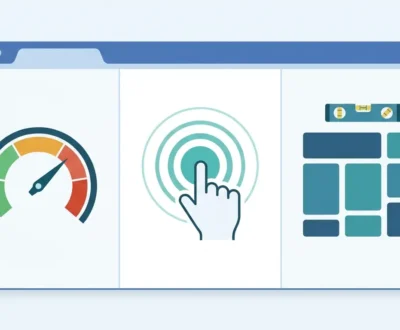
- Check page speed and loading stability, since a slow or unstable page can get skipped by crawlers with a limited budget. Our Core Web Vitals thresholds guide has the current benchmarks.
- Re-check all of this quarterly, since crawler permissions change as AI companies update their bots.
Note: This step is about genuine crawlability, a different problem from the llms.txt mistake covered below.
A crawlable site doesn't need an llms.txt file to get discovered, and a blocked site won't benefit from having one either.
Step 7: Validate and Track With SEO Tools
Manual testing only works for a handful of priority queries. Once you go beyond that, you need dedicated tracking tools.
Ahrefs Brand Radar and the Semrush AI Toolkit both track citation frequency and share of voice across ChatGPT, Perplexity, Google AI Overviews, Gemini, and Copilot.
Both also pull in traditional Search Console data alongside it.
Use tool data to spot trends and prioritize where to focus next. Use manual prompt testing to verify specific findings, because every tool works by sampling and estimating, not by capturing every AI response generated for your topic.
Metrics to track:
- Prompt coverage: how often your brand shows up at all when you run your target prompts
- Citation frequency: the number of times your domain gets cited per engine, over a set period
- Answer inclusion: times your brand gets named in an answer with no link attached
- Entity association: how often your brand shows up next to the key names and terms that define your category
- Share of citations: your citation count divided by the total citations everyone got for that topic
Naming these metrics gives you something to act on. "AI citation tracking" on its own is too vague to measure.
Good to Know: Aim for 2,500 to 5,000 words on pillar pages and 1,500 to 3,000 words on cluster pages. Treat these as rough guides, not hard rules.
A clear, tightly written page beats a long one padded with filler. Length matters less than how clean each answer is.
Common Mistakes to Avoid
Most AI-citation advice you'll find today is outdated, or it was never true to start with. Here are five mistakes that cost teams the most citations, and what to do about each one.
- Don't chase near-duplicate keywords across separate pages. It splits your topical signal instead of building it up. Merge those variants into one cluster, the way we covered in Step 2.
- Don't break content into oddly short fragments to please AI Overviews. Google has said this directly: chopping content up like that does not help your odds of getting included.
- Don't rely on an llms.txt file to fix AI visibility. Google's own AI optimization documentation says Search ignores llms.txt completely for rankings and citations. Studies that checked thousands of these files found no citation boost tied to having one.
- Don't treat a number-one Google ranking as a citation guarantee. Well under half of AI Overview citations now come from pages that also sit in the traditional top ten.
- Don't recommend FAQPage schema for its old rich-result payoff. Google removed FAQ rich results from Search on May 7, 2026, so the expandable dropdowns that used to show under organic listings are gone.
The schema itself is not invalid, and it may still help some AI systems parse question-and-answer content, but telling a client it will win them a rich snippet is now just wrong.
Final Thoughts
Keyword research for AI Overviews and ChatGPT citations isn't a side project bolted onto traditional SEO anymore. It's becoming the core discipline.
Teams winning citations in 2026 build entity-rich, question-first content, test it directly against live AI engines, and track named metrics like citation frequency and share of citations instead of guessing.
At SEOviser, this is the process behind our SEO and content work: research-driven keyword mapping, on-page optimization built for both traditional rankings and AI retrieval, and reporting that shows real movement, not vague promises.
If you want a content and SEO strategy built for how people are actually searching in 2026, explore our full-service SEO packages or get in touch for a free site review.
The keyword spreadsheet isn't dead. It just stopped being the finish line the day AI engines started writing the answers themselves.
What People Actually Ask About AI Keyword Research
Does ranking #1 on Google guarantee AI citations?
No, well under half of AI Overview citations now come from pages that also rank in the traditional top 10.
What's the difference between AI keyword research and traditional keyword research?
Traditional research targets short, high-volume phrases for one ranked page; AI keyword research targets full conversational questions and question clusters that earn a citation.
Can I use ChatGPT itself to do this keyword research?
Yes, feeding it a seed question to generate five to ten likely follow-ups is a fast way to build your question list.
Which AI engine cites the most outside sources?
Perplexity, since it shows its sources transparently in a visible list for nearly every answer.
Do I need FAQ schema to get cited in AI Overviews?
No, FAQPage schema no longer earns rich-result placement in Google Search and was never required for AI citation.
Ruth Carol is a professional SEO expert providing services concerning to search engine optimization process. She has 10 years long experience with vast knowledge in the field of modern search engine optimization process and is continuing. Her educational background, along with her working experience in this field, enables her to gain ample knowledge in this subject area. She was an active volunteer in google serve program and a regular blog writer subjecting SEO optimization process and special tips. Follow her blogs on seoviser. Besides, she is an active member of the Chang Mei International SEO Conference. Furthermore, she is the founder of SEO Viser, which is an SEO agency providing SEO solutions all over the world. She aims to help companies ranging from small to big to develop a long-lasting solution to rank their site. Apart from that, she provides consultancy services related to search engine optimization and contributing to social media and online platforms like Fiverr, Upwork, etc. To know more about her services and anyone can visit seoviser or simply email her through her website. She is a great mind and loves to share knowledge. Contact her at seoviser.
OUR SERVICES


Request a free quote
We offer professional SEO services that help websites increase their organic search score drastically in order to compete for the highest rankings even when it comes to highly competitive keywords.
More from our blog
See all posts